
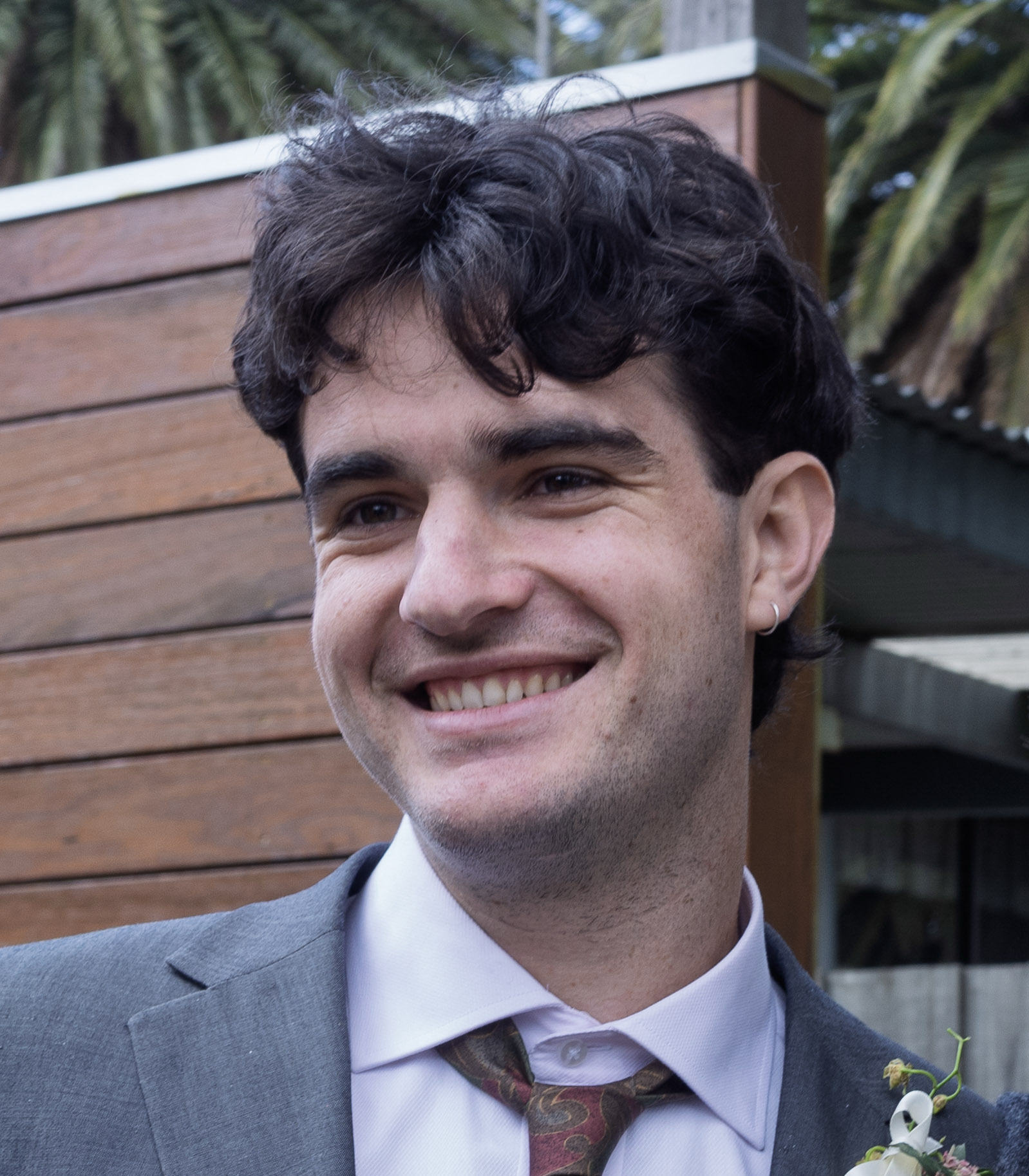
I am a postdoc at UC Berkeley working primarily in the Computational Cognitive Science Laboratory with Bill Thompson.
Before moving to Berkeley in early 2026, I did my PhD at the University of Melbourne where I was working with Andrew Perfors and many other wonderful collaborators and mentors.
I build experiments and develop computational models to explain and predict how people learn and make decisions.
I have broad interests, but most of my current research is focused on understanding how we learn and reason from social information. Some questions I am currently focusing on include:
My work is often on the more theoretical side but I'm also interested in using these theories to understand applied questions, like how people influence each other on social media.
I have also done work in other areas such as perceptual decision-making1 2 , goal prioritisation 3, meta-science 4, and cognitive ageing. 5 6 7
For a full publication list, check out my CV or Google Scholar.
I have experience building powerful, interactive data capabilities. For example, I have worked with the Good Data Institute to consolidate their internal database of volunteers and automate their intake processes. Additionally, I designed and deployed a web-based dashboard using R shiny that informs and visualizes several aspects of their organisation including the diversity and equity of their volunteers and project impact (see this blog post I wrote about the project).
I also worked with the University of Adelaide and the Defense Science and Technologies Group to build a software prototype that leverages state of the art NLP techniques and powerful data visualization libraries to analyse how narratives emerge and spread across social media.
